A common claim online is that adult palatal expansion can bring the upper jaw forward, improving facial profile. This article reviews what the current evidence suggests so you can set realistic expectations before treatment.
What Is It?
Palatal expansion primarily creates transverse (width) change: it widens the maxilla. Forward movement of the maxilla is a sagittal (anteroposterior) change, and downward movement is a vertical change. These are different directions of growth, and the evidence for each is at different stages of development.
Why Does It Matter?
Promising a specific amount of forward movement is not supported by the current evidence and sets unrealistic expectations. Being clear about what expansion reliably achieves — width — and what it may achieve in some patients — forward and downward midface change — is essential for informed consent. The evidence is evolving and individual results vary considerably.
Diagnosis & Assessment
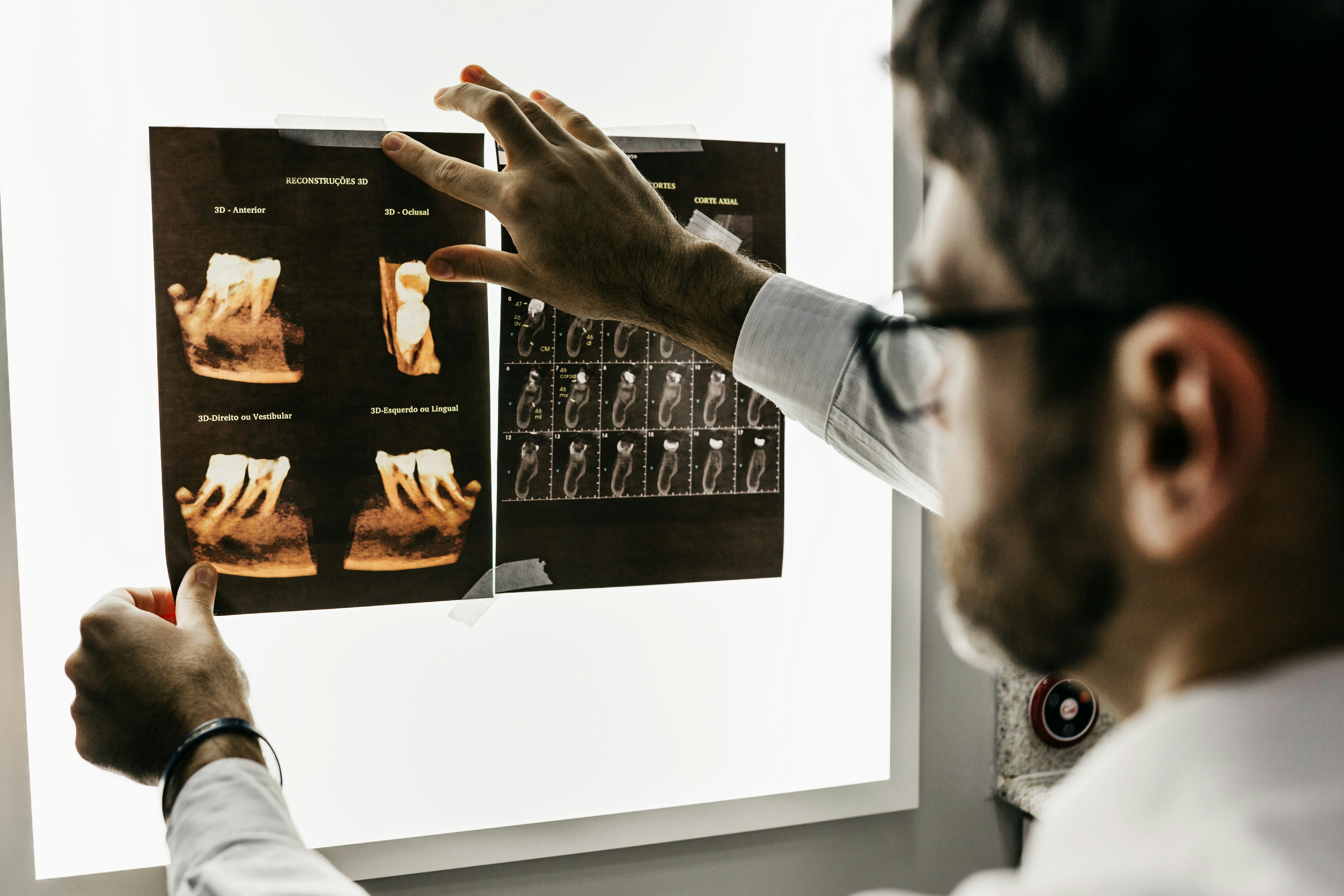
If forward movement is one of your goals, this must be discussed at your assessment. A CBCT allows us to evaluate your skeletal pattern and discuss whether expansion, protraction or orthognathic surgery is the most appropriate option for your anatomy.
Benefits
- Expansion reliably widens the maxilla in suitable adults.
- Combined with protraction, it may contribute to forward and downward midface change in selected cases.
- A thorough assessment protects you from unrealistic expectations.
Risks & Limitations
- Forward movement in adults varies considerably between individuals and cannot be predicted.
- The evidence for forward and downward midface change in adults is still emerging.
- No outcome can be guaranteed; individual results vary.
What expansion reliably does
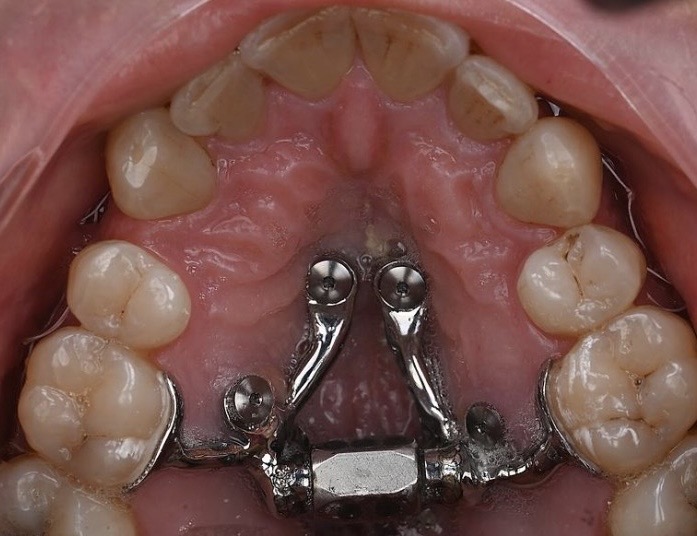
Bone-anchored expansion (MARPE, MSE, FME) reliably widens the maxilla in suitable adults. This transverse change is well documented and is the primary reason expansion is prescribed: to correct a narrow arch, crossbite or crowding, and to create space for alignment or restoration.
What the evidence says about forward movement
A number of clinicians and early studies report some forward and downward change of the midface in a proportion of adults, particularly where the expander engages the circummaxillary sutures (as FME and some customised MARPE designs are intended to). However, the amount varies considerably between individuals and depends on age, suture maturity, appliance design and anchorage. The evidence is still emerging, and individual results vary. We do not promise or guarantee forward movement from expansion alone, and the amount of change cannot be predicted for a given patient.
When forward movement is a treatment goal
Where forward movement of the upper jaw is a specific treatment goal — for example in some Class III cases — expansion can be combined with protraction. In younger patients, a facemask may be used. In adults, bone-anchored maxillary protraction (BAMP) using miniplates and elastics may be considered, but the amount of skeletal change cannot be predicted with certainty and cannot be promised. The plan is set at assessment on the CBCT. See our article on MARPE for underbite for more detail.