
A common question is simply: how long does FME treatment take? The honest answer is that the full timeline depends on your anatomy, the amount of expansion required, and whether alignment is needed afterwards. This article explains the typical stages so you can plan around your treatment, while being clear that exact timings are confirmed at your individual assessment.
What Is It?
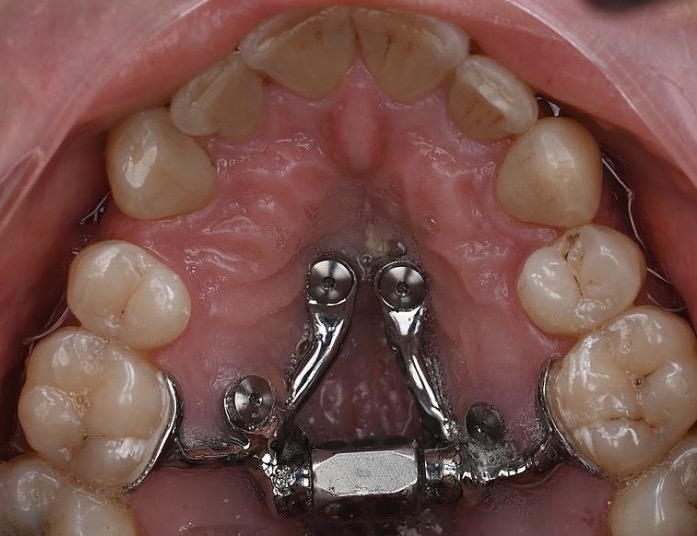
FME treatment is staged rather than a single procedure. The stages are: a diagnostic assessment with CBCT, placement of the expander, an active expansion phase, a consolidation period to allow the bone to stabilise, and — where needed — alignment of the teeth within the newly widened arch, followed by retention. Each stage has its own timeframe.
Why Does It Matter?
Setting realistic expectations about timeline matters because expansion is a biological process. Bone needs time to fill in across the opened suture, and teeth need time to align within the new arch. Promising a fixed end date is not clinically responsible; what we can do is explain the stages and confirm your individual timeline at assessment.
Diagnosis & Assessment
Every timeline begins with the diagnostic assessment. The CBCT allows us to evaluate your suture, bone density and root position, and to give you an individualised estimate of the stages involved. Without this assessment, any timeline would be a guess.
Benefits
- A staged approach allows bone to stabilise between phases.
- Individualised planning based on your own CBCT.
- Clear expectations set at assessment rather than promised in advance.
Risks & Limitations
- Exact timings cannot be guaranteed and depend on individual biology.
- Treatment may take longer if alignment is required after expansion.
- Individual results vary and cannot be guaranteed.
The stages of FME treatment
1. Diagnostic assessment: The Palate Expansion Diagnostic Package (£2,800, including CBCT with report) is the foundation. A standalone CBCT with report is £350. This stage confirms suitability and plans the appliance.
2. Expander placement: The FME or chosen appliance is placed under local anaesthetic. This is a clinical appointment, not surgery.
3. Active expansion: The appliance is activated over a period of weeks. The active expansion phase is typically short, with patients feeling pressure rather than pain.
4. Consolidation: The appliance is left in place to allow new bone to form across the suture. This is essential for stability.
5. Alignment and retention: Where needed, aligners or braces straighten the teeth within the widened arch (clear aligners from £5,950), followed by retention.
What affects the timeline
Several factors affect how long treatment takes: your age and suture maturity, the amount of expansion required, how quickly your bone responds, and whether alignment is needed afterwards. Because these are individual, exact timings are confirmed at your assessment and cannot be guaranteed in advance. You can read more about the full process on our adult palatal expansion page.
