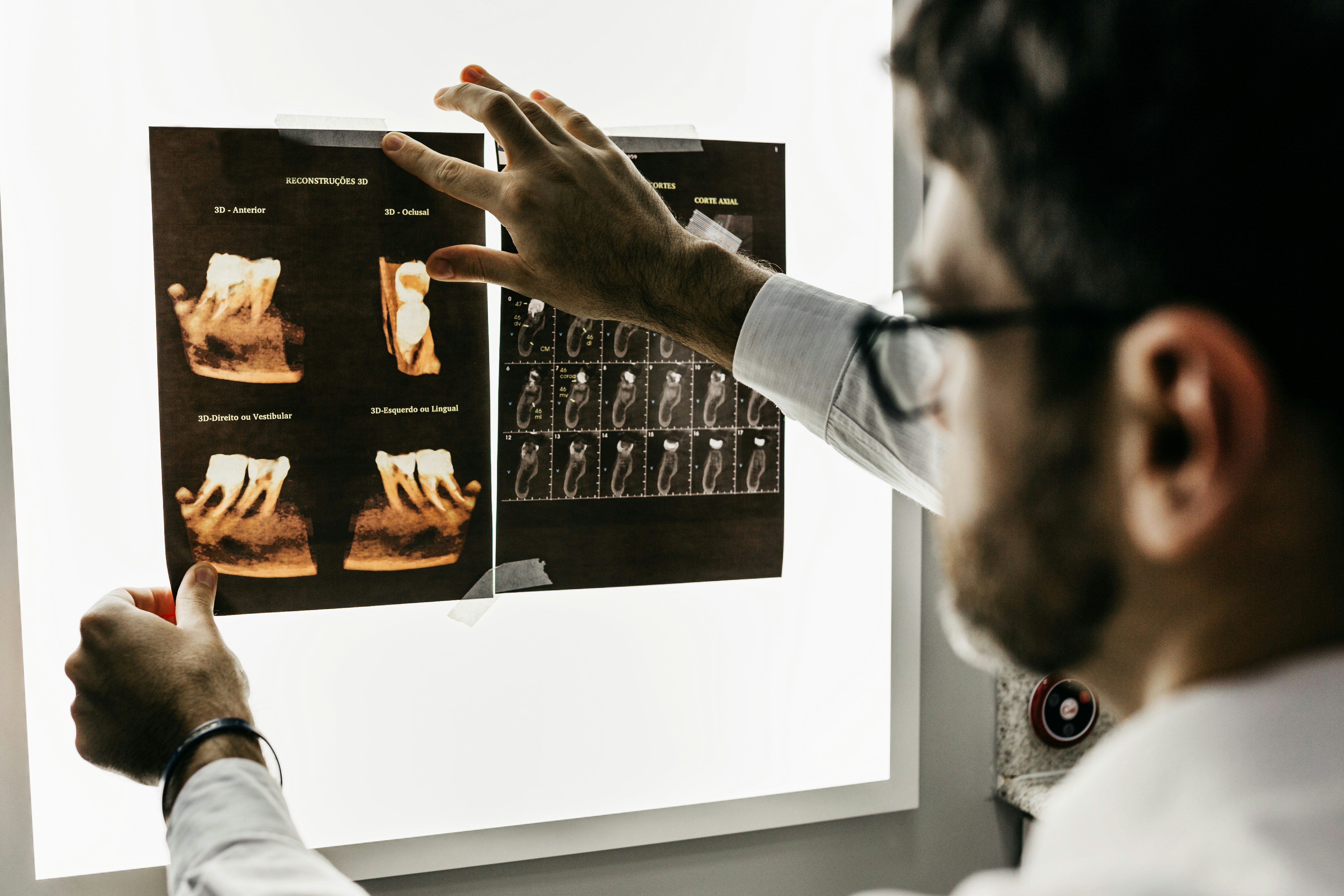
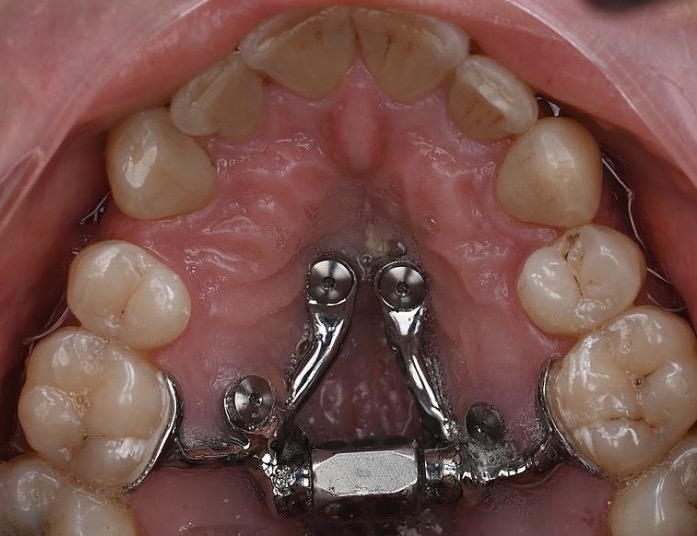
A frequent question from older adults is whether palatal expansion is still possible at 40, 50 or 60. The honest answer is that bone-anchored expansion can still be possible, but the mid-palatal suture becomes increasingly fused with age, so suitability is decided on CBCT rather than on a fixed age cut-off. This article explains how age affects the decision.
What Is It?
Bone-anchored expansion (FME, MSE, customised MARPE) uses temporary anchorage devices to deliver expansion force through the bone. In younger adults the suture is more easily separated; in older adults the suture may be more fused, which can make non-surgical expansion more challenging. The CBCT allows us to assess the suture directly.
Why Does It Matter?
Promising that expansion will work at any age is not clinically responsible. What matters is whether your individual suture can be separated non-surgically, and that is a question only the CBCT can answer. Being honest about this protects you from unrealistic expectations and from undergoing a procedure that may not succeed.
Diagnosis & Assessment
There is no fixed age cut-off for expansion. The decision is made on the CBCT, which allows us to assess the density and fusion of your mid-palatal suture directly. The Palate Expansion Diagnostic Package is £2,800 and includes the CBCT with a written report. A standalone CBCT with report is £350.
Benefits
- Expansion can still be possible for adults over 40.
- The CBCT, not your age, determines suitability.
- An honest assessment protects you from the wrong treatment.
Risks & Limitations
- Suture fusion increases with age; a small proportion need surgery.
- Forward movement varies considerably and cannot be promised.
- Individual results vary and cannot be guaranteed.
How age affects expansion
The mid-palatal suture fuses gradually over time. In younger adults it is more easily separated with bone-anchored expansion. In adults over 40, the suture may be more mature, which can make non-surgical expansion more challenging — but not impossible. Many adults in their 40s, 50s and 60s are still suitable candidates; the CBCT determines this, not your chronological age.
When a surgically assisted approach is needed
A small proportion of older adults have a heavily fused suture that will not open with non-surgical expansion alone. In these cases, a surgically assisted approach such as DOME (from £20,000) or SARPE may be the appropriate option. This is not a failure of MARPE or FME; it is the correct treatment for a different anatomy. The decision is made on the CBCT. You can read more on our adult palatal expansion page.
Forward growth in older adults
A number of clinicians and early studies report some forward and downward midface change in a proportion of patients, but the amount varies considerably between individuals and cannot be predicted or promised. This is true at any age, and expectations must be set at assessment on the CBCT. See our article on forward growth for detail.